There's a Hidden Door on Your Phone
In the mid-90s, my family's computer was a Gateway. If you are of a certain age, you remember the Gateway. It came in a box printed with cow spots, and it sat in our house for years until it got old, the way computers do, and my parents upgraded to whatever came next.
The cow computer went to the basement. Nobody threw it out, because nobody knew where you took an old computer. It just sat there, in the back, defunct.
I wanted to burn CDs. Mix CDs, mostly, and trade recordings with friends. The new family computer had no burner in it, and burners cost money I did not have. But the cow computer had a CD drive, and it was already dead, so there was nothing to lose.
So I opened it up.
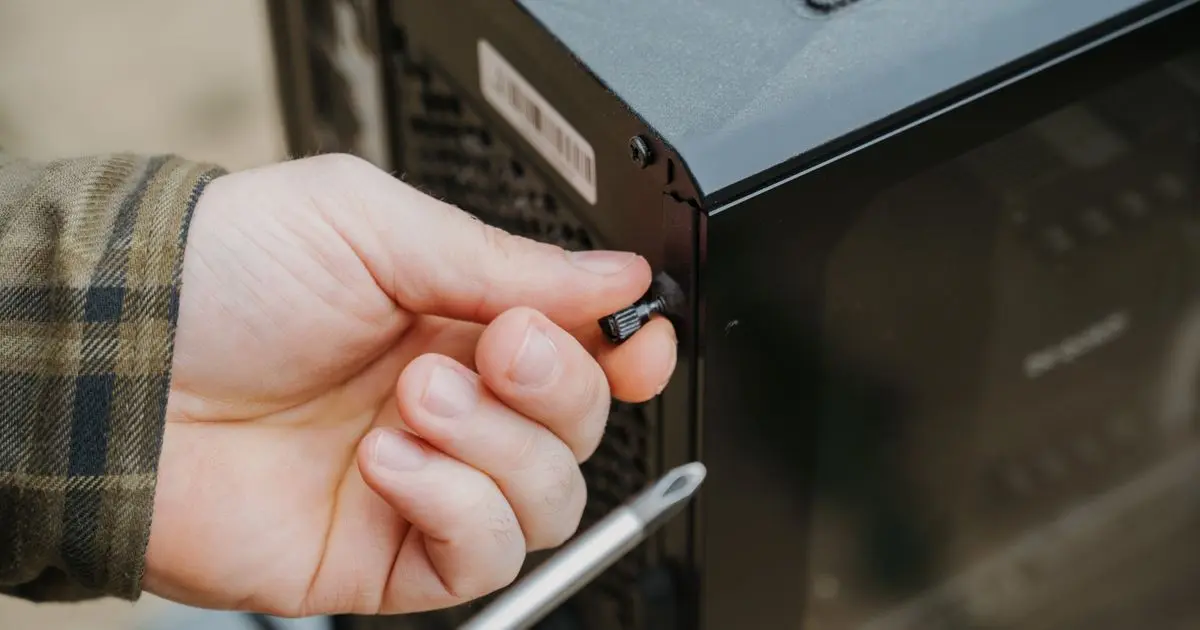
I want to be clear about my qualifications here: I had none. I was a kid with a screwdriver and a goal. I took the cover off and looked at how the thing was put together. Motherboard, hard drive, CD drive, cables running between them like a little city's wiring. The drive was held in by two screws. Two screws. I took them out, slid the old drive out, slid a burner in, put the screws back, and closed the cover.
Boom. The dead computer did a new thing.
I never became a coder. I never got much deeper than that afternoon. I just stayed the kind of person who asks, how does this work, and what is behind this panel, and what happens if I try. At trivia night, I am the friend with the fun fact. Did you realize that if you do this, you can do that? And somebody always says, what, really? No way.
I am telling you this because that same friend is who I want to be for you here. Not a guru. The guy next to you at the soccer game who leans over and says, dude, check this out.
Fun fact. Your phone has hidden doors.
You already own one of the most powerful computers ever made. You also use about ten percent of what it can do, and that is not your fault. Phones do not come with a manual anymore. Every update buries the good stuff in a Tips app nobody opens. We are all too busy living our lives to go spelunking through settings menus, so the doors stay hidden, and we assume the problem is us.
Here is one door. Press and hold your assistant app's icon, the one you barely open. A menu appears that you have probably never seen. On mine, two of the choices say Open mic and Talk Live. That means your phone has been ready, this whole time, to listen to you the second a thought shows up. No app to open. No typing. No waiting until you get back to your desk, by which time the thought is gone.
Because that is when the thoughts come, isn't it? Not at your desk, in a quiet moment, with a notebook ready. They come in the shower. In the car. On the sideline. Holding a kid with one arm and a phone with the other. The permission slip, the dentist, the idea for the business, the thing you promised your sister. Modern life does not schedule your thoughts for business hours. It throws them at you in the flow, and if there is nowhere for them to land, you do the only thing you can. You hold them. All of them. In your head. All day.
You cannot set down a thought that lives nowhere else. That is not a discipline problem. It is a storage problem.
Step zero is seeing it differently.
Step one, the actual setup, takes about 30 seconds, and I will walk you through it like a friend, because the only shame in this is the shame of never being shown. We will get to that.
Step zero comes first, and it is just a way of seeing. Do not think of the assistant on your phone as a search engine with a voice, or as some company's app you are supposed to be impressed by. Give it a name. Think of it as a person with a job. A chief of staff, in your pocket, one button away, whose entire role in life is to take whatever you say, the second you say it, and hand it back to you sorted, organized, and ready to act on. You talk. It carries. That is the whole arrangement.
I run businesses. I have three kids. My head does not have an off switch, and I got tired of being the only storage system my life had. So I took the cover off, the way I did in the basement, and I found the door. Then I did what I have always done. I turned to the person next to me and said, fun fact. Did you realize?
Follow me. I got you. It might get a little nerdy weird for a minute, but never fear. We can do hard things, and it may transform your life.
Let's go. Step one is on the other side, and it takes 30 seconds.
David Heyburn is the founder of The AI-Powered Owner, a course and private community that teach overwhelmed owners and default parents to build an AI chief of staff from the tools they already own. Start at aipoweredowner.com.