Rules of the Road: Fear AI Enough to Build the Road
I keep thinking about why so many smart people are reluctant to touch AI. Not careless people. Not people who are afraid of anything new. Thoughtful people, the kind who read the fine print and ask the second question. They look at this technology and they hold back.
I think the reluctance makes sense. And I think about it every time I get in my car.
Useful, dangerous, and finally usable
Cars are incredibly useful. Cars are also incredibly dangerous. Both of those things are true at the same time, and they have been true for as long as cars have existed.
Few inventions have done more to expand what a person can do. A car lets you go further, and faster. It lets you carry more of your life with you: the groceries, the kids, the tools, the equipment for the job. It puts people and places within reach that were out of reach before. A job across town. A parent in the next county. A customer an hour away.
I say all of that as someone who spent years loathing cars. I am not writing as a fan. I am writing as someone who has looked hard at what they cost and still has to admit what they made possible.
But here is the turn. That expansion only ever worked because of the order imposed on it.
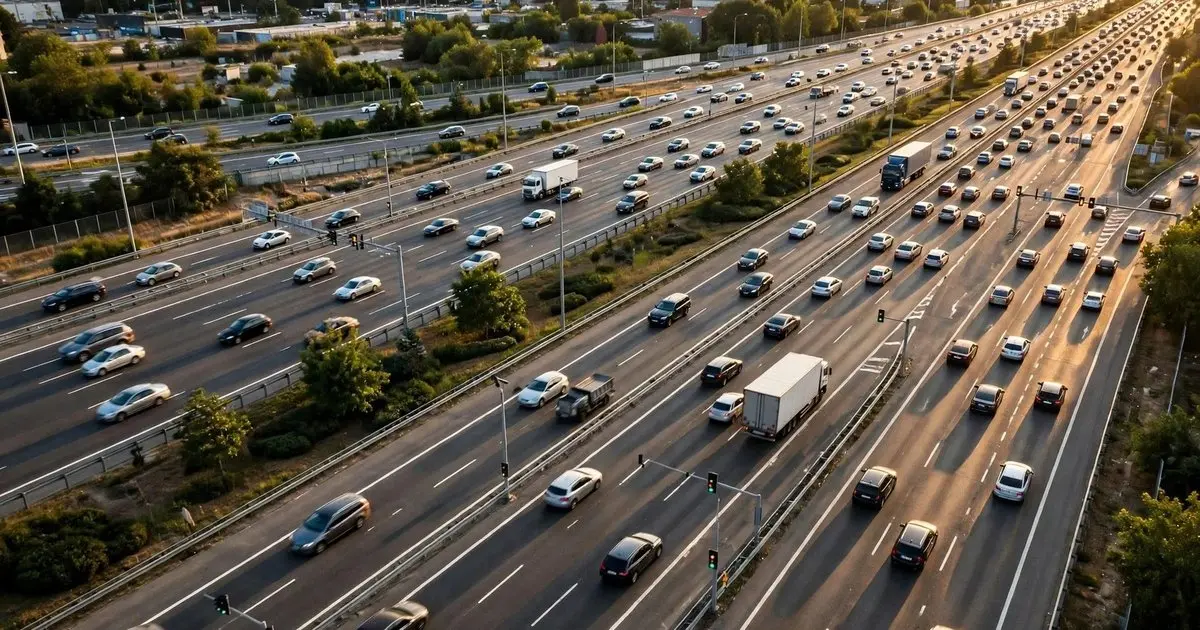
The only reason millions of us can use cars safely every day is the road itself. Lanes. Lines. Stop signs. Speed limits. Rules for who goes first. None of it is glamorous. Nobody buys a car because of the painted line down the middle of the street. But every one of us depends on that line every time we drive.
Take the structure away and you do not get freedom. You get chaos. The chaos people fear is exactly what happens without the rules.
That is what regulation actually is. Not the enemy of a useful tool. The thing that makes the useful tool usable.
The word belongs in this conversation
I want to be honest about how high the stakes are, because I think we do each other a disservice when we talk around them.
Last night my therapist named the darkest possibility out loud: suicide.
I am not going to dress that word up or soften it into something easier to read. That loss of life is utterly tragic. And the word belongs in this conversation. When we talk about a technology this powerful, the worst outcomes are part of the honest picture, and leaving them out does not make anyone safer.
The car carries the same weight. We just got used to it.
According to the World Health Organization, road traffic injuries are the leading cause of death for children and young people aged 5 to 29, and approximately 1.16 million people die in road crashes each year.
Read that slowly. More than a million lives, every year, from a tool most of us use without a second thought. That should be a permanent reality check on the power, and the danger, of the driver's seat.
A permanent reality check on the driver's seat
You can now do in 24 hours what took weeks or months a generation ago.
You are also stepping into something that could kill you.
Both sentences are true. I do not think either one should be allowed to cancel the other.
The fear of God
I have wrestled most of my life with the phrase "the fear of God."
I believe that fear is not terror. It is a profound respect for power. It is the posture of someone who understands what they are standing in front of. That is the healthy kind of fear. Not the kind that makes you run, and not the kind that freezes you. The kind that makes you careful, and humble, and serious.
I think we should rightly fear AI that way.
A profound respect for what it can help humans achieve. And a profound respect for what it can destroy in unregulated environments.
Those are not two different attitudes. They are one attitude, looking at the same power from both sides. You cannot really respect what a tool can do for you unless you also respect what it can do to you.
Fear AI enough to build the road
So to the leaders charged with building the guardrails of our society: fear AI enough to build the road.
Not enough to ban the car. Not enough to pretend it was never invented. Enough to paint the lines, set the limits, and decide who goes first. Enough to do the unglamorous work that turns a dangerous invention into something ordinary people can use every day.
Which is why I cannot understand the current push in Washington to keep AI as unregulated as possible.
That is like looking at the highway and deciding the lines and the lights are the problem.
The rule in my own house
I am not writing this from the sidelines. I use AI every day, in real work, with real consequences. So here is where I have landed in my own work: use the tool, and build the guardrails.
In everything I run with AI, there is one rule that does not bend. Nothing sends, books, or spends until you say yes. In my case, the "you" is me.
The machine drafts. A human decides.
It can write the email, but it cannot send it. It can propose the appointment, but it cannot book it. It can lay out what something costs, but it cannot spend a dollar. Every one of those last steps waits for a person.
Those limits are not a drag on what the tool does for me. They are the reason I can trust it with real work. Without them, I would be back where those thoughtful, reluctant people are, holding back, because I would have no way of knowing what the thing might do on its own. With them, I can hand it more, not less. The guardrails are what make the handing over possible.
That is the road, at the scale of one household and one business. Lines I drew myself. A rule for who goes first. And the human always goes first.
The road is the point
Every powerful tool we now take for granted went through this. It started out dangerous and useful at the same time, and it stayed dangerous until somebody did the slow work of building the road around it. Then, over time, it became ordinary. Not because the danger disappeared, but because the structure around it was built well enough that ordinary people could trust it.
That is the job in front of us with AI. Not to fear the machine in the way that makes us run from it, and not to wave it through in the way that pretends there is nothing to fear. To fear it the healthy way. To respect its power enough to build the road.
The reluctant, careful people I started with are not wrong. They are waiting for the road. Some of us can start building it in our own work today, one guardrail at a time. The rest of it is the work of the people we have charged with building it for everyone.
Fear AI enough to build the road. Then let people drive.
David Heyburn is the founder of The AI-Powered Owner, a course and private community that teach overwhelmed owners and default parents to build an AI chief of staff from the tools they already own. Start at aipoweredowner.com.