Take the Power Back

I was listening to two men I have never met, but who have mentored me more than most people I know. David Brooks and Jonathan Haidt, talking about what AI is doing to us, and to our kids.
In the first segment, Brooks said the quiet part out loud: even if none of the bad predictions come true, even in the best case, AI as it is currently built will make us matter less to each other. Unless, he said, "we can get very different AI and take back some control."
I had to sit with that. Because taking the power back is exactly what I have been trying to do, in my own small life, with my own small tools. And I do not think the answer is a better app.
One device, two masters
Here is the problem nobody designs for. The phone in your pocket is the organizing medium of a productive life. School reminders live there. The calendar lives there. The email from the teacher, plus the note that came home in the backpack, the thing you have to bring on Tuesday for your Mom's group, all of it runs through that one screen.
And that same screen is the distraction machine. The same device that carries the signal carries the noise, at the same volume, in the same tool, one thumb-flick apart.
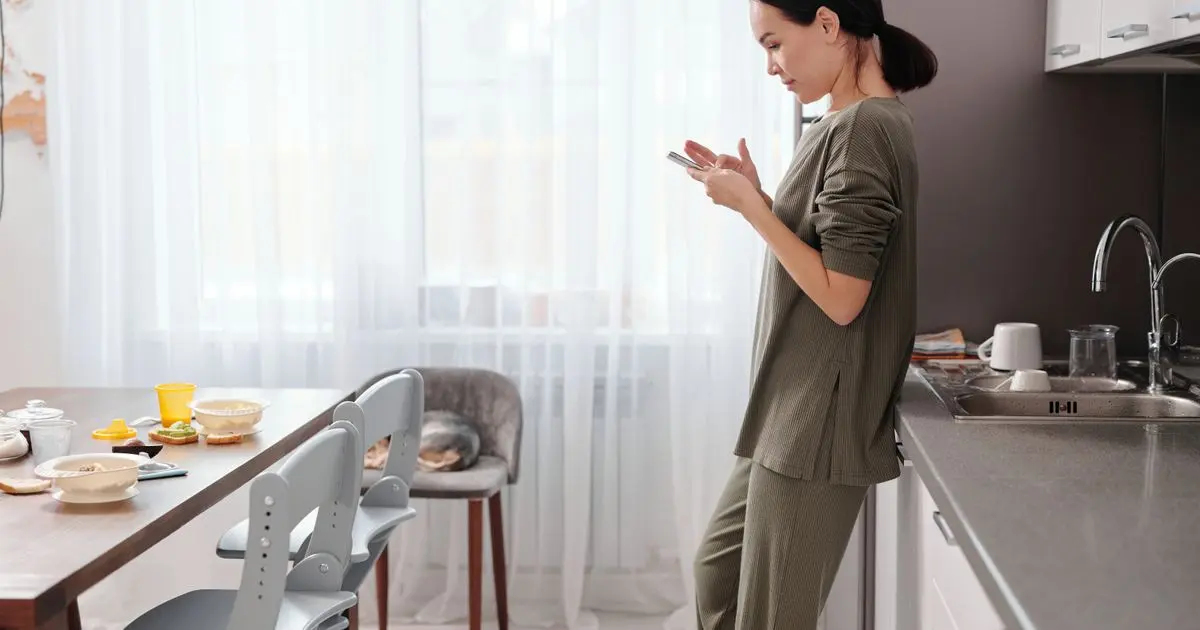
So who connects all the dots, and is also responsible for keeping the distractions at bay? You. You, only You. You are the one who reads the school email, checks it against the calendar, remembers the backpack note, and holds the Tuesday thing in your head until Tuesday, but wait, does that mean I need to get the thing on Monday? You are the middleware of your own life.
"The devil is in the default"
I want to be clear about something. This is not a discipline problem, and it is not a character problem. The person is not the defect. The person is responding to an environment that was built, on purpose, to capture them.
There is an old saying: the devil is in the details. The tech companies know exactly what they are doing, and they have spun that idiom. For them, the devil is in the defaults. Whatever tool, whatever way of using it, becomes the default mode is the one that has you hooked, and you cannot break free, because you never chose it in the first place. It was just already on.
Our defaults moved. My parents had a house phone for decades. The last four digits of that number were the code for half the locks or pin codes in our family. That phone hardly ever rings now, and when it does, the whole family knows its caller ID will read "Unavailable," a telemarketer no one wants to talk to, so the phone is literally never answered. The default way the world reaches a family is no longer a phone on the wall. It is the smartphone, with everything on it, all the time, demanding to be held in somebody's head.
And somebody does hold it. The dings, the pings, the notifications, the permission slip, the grocery list, the appointment that needs rescheduling. In most homes that holding job falls on the mother, the Chief Family Officer, and it is executive work with no title, no salary, and no staff. It never clocks out. Somebody is paying $150,000 a year for that job in the corporate world. In a home, you are doing a $150,000 Chief of Staff job for free, and nobody sees it.
I am not a guru. I am a husband and a dad of 3, in the arena, "marred by dust and sweat and blood."
I did not come to this as an AI enthusiast. I came to it as a husband and father who, as Theodore Roosevelt might say, "strives valiantly; who errs, who comes short again and again," knocked down, back up against the wall. I have three boys. One of them has Down syndrome and a medical file thicker than most novels. My life is cumbersome on a good day, and I still have to show up as a husband, a father, and the guy striving to run businesses that produce enough to keep the lights on, food on the table, and hopefully a family vacation someday. That hasn't been yesterday, or today, but we hope someday. I do not have attention to spare for platforms to feed on. My attention is spoken for. It belongs to my family.
So no, telling adults like me to go back to a brick phone is not a serious answer. For our kids, yes, I believe in delaying and limiting, and Haidt has convinced me there, if I wasn't already a believer. But an adult running a modern life cannot opt out of the organizing medium. The school, the doctors, the clients, the calendar, they all live on the device now. The question is not whether the device stays. The question is who it works for.
A reorganization, not another app
Here is the move I have been making, and teaching. Do not add another tool. Reorganize the ones already in your life.
Think of it as a corporate reorganization of your digital life. Right now your apps are a pile of departments with no manager, and you are the unpaid staff member running between them. The reorganization puts an AI "Chief of Staff" in the middle: one point of entry that captures the inputs, organizes them, distills them, and brings you what matters in a brief you can actually use, a morning brief and an evening brief, at the times you chose.
The tools stop feeding on you and start reporting to you. The noise gets held by somebody else. The signal still gets through.
An AI Chief of Staff that lives in your pocket, on your terms: one you control, that never controls you. And because it is yours, the guardrail is simple. Nothing sends, books, or spends until you say yes.
Push the kid on the swing
What does the power actually look like when you take it back? It is not a dashboard. It is pushing your child on the swing with both hands and your whole mind, because the Tuesday thing is being held by a system that will remind you Tuesday, at the right moment, and you do not have to hold it through the weekend. It is sitting in the sandbox and actually playing. It is evenings that belong to your family again, because the lists, schedules, and logistics run on a system instead of on you.

Stop being the middleware of your own life. Become the owner who has staff. That is true if you run a business, and it is just as true if the business you run is a household.
Brooks is right that it will take a different kind of AI. I would add: it will take a different arrangement of the AI and the tools we already have, one where they serve a human life instead of consuming it. That is what I am building, for my family first, and it is what I teach at The AI-Powered Owner. The classroom is open. Come take your seat, and take your power back with it.
David Heyburn, Founder, The AI-Powered Owner, 321 Properties Group LLC