The Bridge: Why Your Best Ideas Never Become Anything
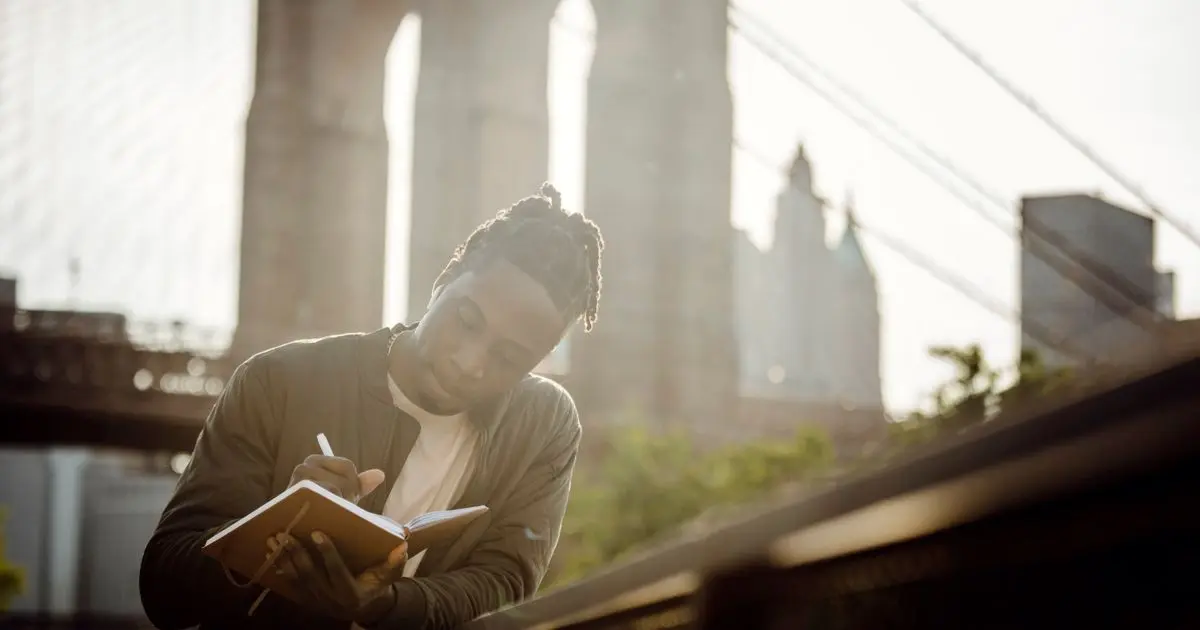
Here is a strange and wonderful thing about how people are made: the ideas do not stop. Owners, parents, builders, anyone with a creative mind, which is everyone, gets handed ideas constantly. A better way to run the shop. A product nobody has built yet. A fix for the thing that has been broken in the house for a year. A sentence that would change a whole conversation.
And almost none of them become anything.
Not because the ideas were bad. Not because the person was lazy. Because an idea that arrives in the wrong place, at the wrong moment, with nowhere to land, simply evaporates. We have all buried hundreds of them.
Ideas do not keep office hours
Notice when your best thinking actually shows up. It is rarely at a desk, in a quiet room, with a notebook open and permission to think. Desks are where ideas get processed. They are not where ideas are born.
Ideas arrive in the car between errands. On a walk. In the shower. In the middle of an ordinary afternoon with your kids, when your mind is loose and wandering and suddenly the whole thing assembles itself in one clear picture.
That is not a flaw in the system. That is the system. A creative mind works in the background, all day, and it hands you the results when it pleases. The tragedy is what happens next: you are driving, or holding a child, or standing in a grocery line, and the idea has about ninety seconds to live.
So it dies. Not rejected. Not tried and failed. Just unhoused.
For most of history, there was no bridge
It is worth sitting with how new our moment is. For nearly all of human history, having an idea and building it were separated by enormous distance: money, permission, tools, other people's labor, years. Most ideas died in the minds that made them, and the world never knew.
That distance has collapsed. A person can speak an idea out loud today, into a phone, and watch it get captured, organized, connected to their other ideas, drafted, and set in motion. Not someday. This week. The raw possibility available to an ordinary person with an ordinary phone would have looked like magic a generation ago.
Which raises an honest question: if the distance collapsed, why are our ideas still dying?
Because a possibility is not a pathway. Knowing it can be done is not the same as having a way to do it, in the middle of an actual life, with actual demands arriving every four minutes. People do not need more inspiration. They need a bridge: a way for an idea to cross from the moment it arrives to the place where it can be held, stitched together with the rest of what they know, and worked on when there is finally a quiet hour.
What a bridge actually does
A bridge catches. The idea leaves your head the moment it arrives, spoken out loud, before the ninety seconds run out. Your head was never a filing cabinet; it is a workshop, and it works better empty of storage.
A bridge holds. The idea waits, safely, without you rehearsing it in the shower for three days to keep it alive. Preoccupied is allowed. Busy is allowed. The idea does not need your attention to survive anymore.
A bridge connects. One idea alone is a fragment. Stitched to the others, held next to your real knowledge of your business and your life, fragments become plans. Most people are not short on ideas. They are short on assembly.
And a bridge delivers. When the quiet hour comes, the idea is there, developed, ready to be built instead of ready to be mourned.
That is the whole gift of this moment, stated plainly: your ideas were never the problem. The missing piece was never creativity. It was the bridge between a mind that generates and a life that can build.
That bridge is what owners are building inside The AI-Powered Owner: a system that catches what your mind hands you, wherever you are, and carries it somewhere real. If your best ideas keep dying in the car, come build your bridge with us: The AI-Powered Owner on Skool.